Floor care
Strip and wax is usually the wrong answer
Annual stripping is expensive, disruptive and hard on the tile. A maintained finish with burnishing and scrub and recoat keeps the floor better for less money.
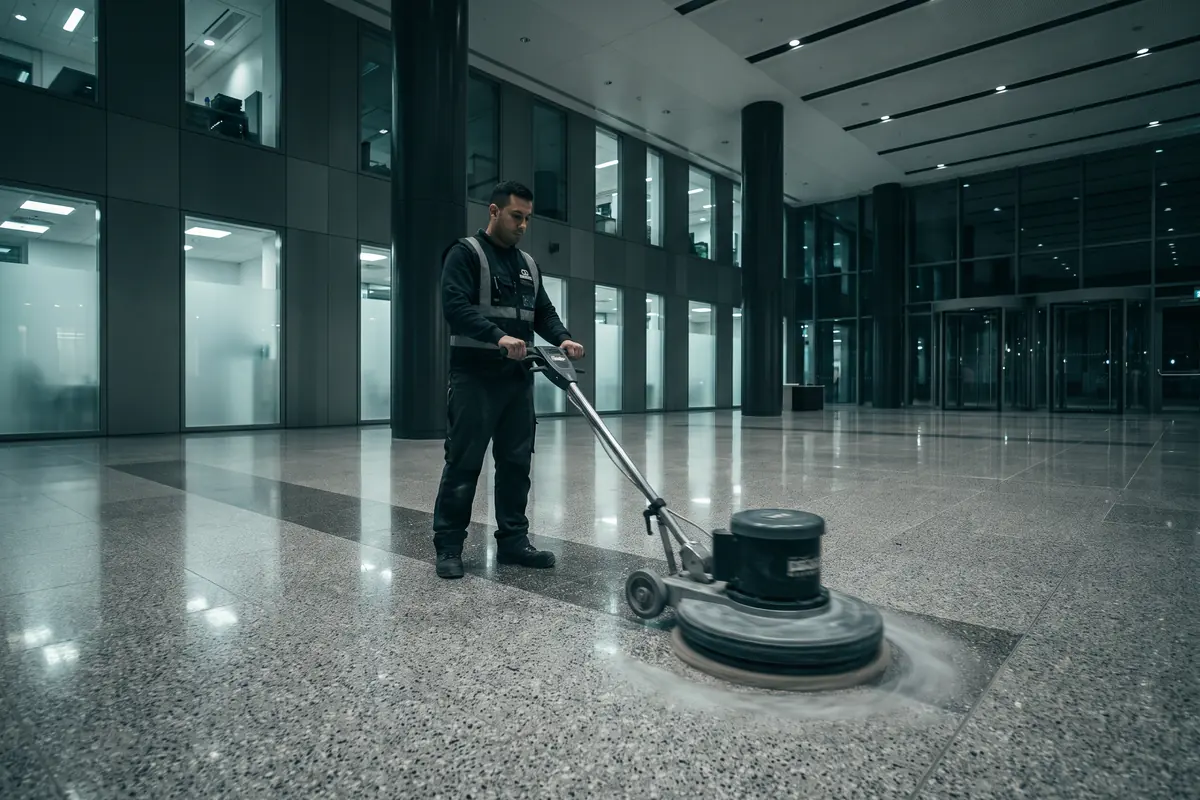
A full strip removes every coat of finish down to the tile using an aggressive chemical, then rebuilds the floor from nothing. It is the most disruptive, most expensive and highest risk operation in commercial floor care, and in a well maintained building it should be rare.
The maintenance ladder, cheapest first
Grit is what kills a floor. It is abrasive, it is tracked in on shoes, and a matting programme at the entrances plus honest nightly dust mopping removes most of it before it ever reaches the finish.
| Operation | What it does | Typical frequency |
|---|---|---|
| Dust mop and damp mop | Removes grit before it abrades the finish | Nightly |
| Burnish | High speed pad restores gloss and hardens the top coat | Weekly to monthly by traffic |
| Spray buff | Restorer plus pad repairs light scuffing | Monthly |
| Scrub and recoat | Removes the top coats and lays two fresh ones | Quarterly to twice yearly |
| Strip and refinish | Removes all finish, rebuilds with four to five coats | Every three to five years |
Why annual stripping persists
Because it is easy to sell and easy to schedule. It appears as one visible line on a contract, it happens over a long weekend, and the floor looks spectacular on the Monday. Twelve months later it looks tired again, and the cycle repeats.
A maintained floor on burnish and recoat looks slightly less spectacular on day one and markedly better on day two hundred, which is where your tenants actually live.
When a strip genuinely is the answer
- Finish build up has yellowed or is powdering, and recoating would only trap the problem.
- Contamination is under the finish rather than on it.
- The floor was previously maintained with an incompatible product and the coats will not bond.
- A tenant change or renovation means the floor has to be reset to a known baseline.
What to require in the scope
Coat count on refinish, stated in writing. Four coats in traffic lanes and five at minimum in a lobby. A slip resistance expectation, so nobody hands you a mirror finish you cannot walk on. A signage and closure plan. And before and after photographs at the same camera position, which cost nothing and settle every argument about whether the work was done.
About this article
Written for a demonstration website. Cornelius Batiste is a fictional person and Meridian Facility Services is a fictional company. The operational guidance reflects real commercial cleaning practice, and every figure given as a range is a range because the real answer is building specific.