Sustainability
Green cleaning is a method, not a bottle
Dilution control, microfibre, HEPA filtration and a matting programme do more for a building's environmental footprint than switching to a bottle with a leaf on the label.
- GS-42Green Seal standard the programme conforms to
- CIMS-GBISSA green building certification held
- 100%Battery powered floor equipment indoors
- 0Aerosol air fresheners on any account
The environmental footprint of cleaning is mostly not the chemical
It is the packaging and the water shipped inside ready to use bottles, the electricity in the equipment, the laundry, and above all the frequency of restoration work caused by poor routine maintenance. Stripping and refinishing a floor annually because nobody installed matting is the largest single environmental cost in most buildings, and it never appears on a green cleaning checklist.
So our programme starts with the boring parts. Concentrate through a wall mounted proportioner instead of a pallet of pre-mixed bottles. Microfibre that removes soil mechanically so less chemistry is needed. Matting that stops grit at the door and pushes the strip interval from one year out to four.
Then, and only then, the product certifications, which matter but are the easiest part.
The programme, line by line
Everything below applies to every account by default, not as a paid upgrade.
Green cleaning programme
- Green Seal GS-42 conforming chemistryGeneral purpose, glass, bathroom and carpet cleaners selected against the GS-42 standard. Disinfectants are chosen for the required EPA claim first, because efficacy is not negotiable.
- Dilution controlled dispensingWall mounted proportioners rather than ready to use bottles. Less packaging, less transport weight, and no over concentration.
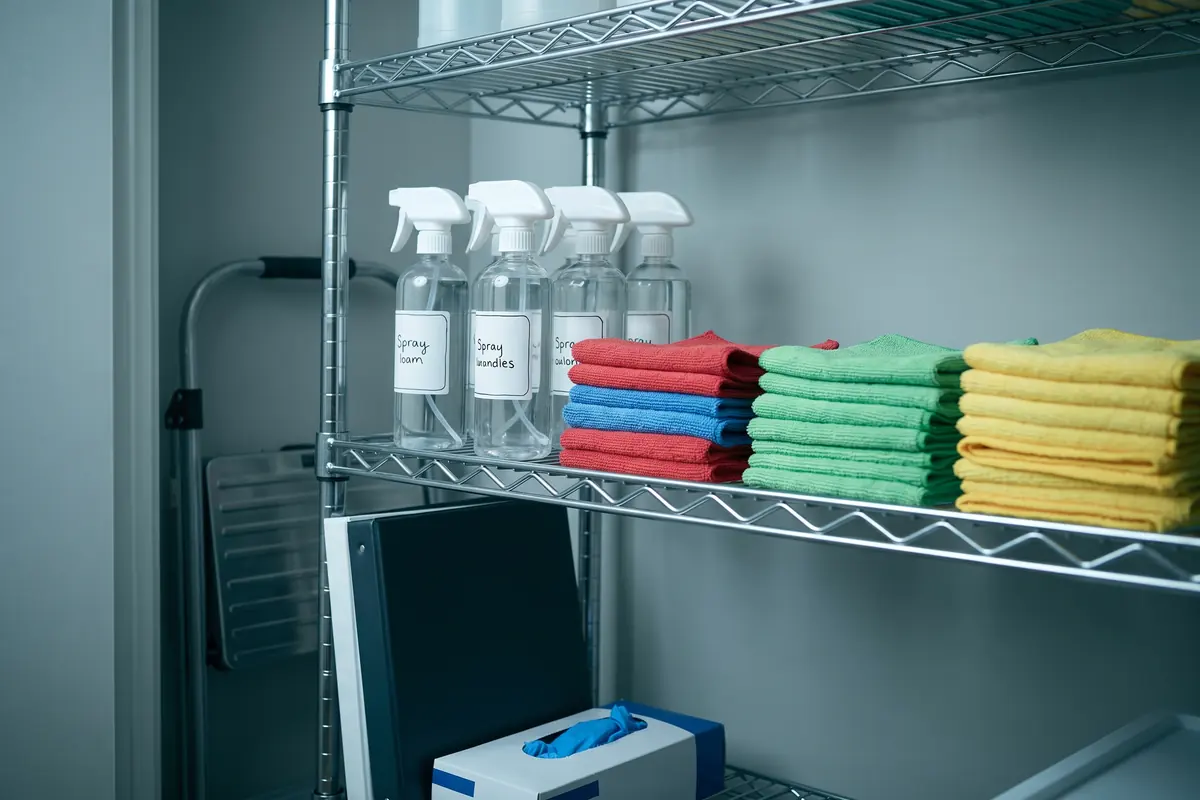
- Microfibre as the primary soil removal methodMicrofibre removes soil mechanically, so less chemical is needed for the same result. Cloths are laundered and reused rather than thrown away.
- HEPA filtered vacuumsVacuums with sealed HEPA filtration and a measured sound level, so indoor air quality improves rather than fine particulate being redistributed.
- Entrance matting programmeFifteen feet of matting at each entrance. It removes soil at the door, which reduces chemical use, extends the floor finish life and defers restoration cycles.
- Waste stream separation supportedCollection to your streams as your building is set up, with contamination reported rather than quietly consolidated into landfill.
- Battery equipment over combustionScrubbers and sweepers are battery powered. No combustion equipment operates inside an occupied building on our accounts.
- No aerosol air freshenersMasking an odour is not cleaning. If a space smells, something is wrong with it and that is the thing to fix.
Certifications, and what each one actually covers
Three different bodies certifying three different things. Only one of them is about the products in the bottle.
| Certification | Certifies | What it does not cover |
|---|---|---|
| Green Seal GS-42 | The cleaning service programme: products, equipment, procedures, training and communication | It is not a product certification and does not assess disinfectant efficacy |
| Green Seal GS-37 and GS-53 | Individual cleaning products against health and environmental criteria | It says nothing about how the product is used in your building |
| ISSA CIMS-GB | That the contractor can deliver and document a green programme to LEED criteria | It is a management assessment, not a measurement of your building |
| EPA registration | That a disinfectant is effective against named organisms at a named contact time | It is an efficacy registration and is not an environmental rating |
A vendor claiming to be Green Seal certified usually means their programme conforms to GS-42 or their products carry GS-37. They are different claims and it is worth asking which one is meant.
LEED support
What we hand your project team
For a LEED v4.1 Operations and Maintenance submission the green cleaning credits need documentation from the cleaning contractor. Here is the pack, ready before you ask for it.
- Green cleaning policyWritten policy covering products, equipment, training and communication
- Product schedule with certificationsEvery product with its certification body and reference
- Equipment inventoryFiltration rating and sound level per machine, with purchase dates
- Entryway system documentationMatting length and maintenance frequency per entrance
- Training recordsHours and content per technician, dated
- CIMS-GB certificateCurrent certification with the assessment date
Waste, and the honest limit of our role
We collect to whatever streams your building is set up for and we report contamination when we find it. What we will not do is quietly consolidate a contaminated recycling stream into landfill and let your diversion number stay pretty. If a floor is putting food waste into paper recycling every night, you should know that, because the fix is a signage and education problem in that tenancy rather than a cleaning problem.
On post construction work, where the diversion actually moves the needle for a LEED submission, our debris goes into your tracked streams and we record the weights.
Questions
About green cleaning
Is green cleaning more expensive?
The chemistry costs marginally more per gallon and the programme costs slightly less to run, because dilution control and microfibre both reduce consumption. Where it genuinely costs more is training, since a green programme depends on method rather than on chemical strength. Across a full year on a typical office account the difference lands within a couple of percent, in either direction.
Do you use green disinfectants?
We use disinfectants registered by the EPA for the claim your building actually needs, and efficacy comes first. That said, accelerated hydrogen peroxide chemistry is both a lower hazard profile and often faster on contact time than the alternatives, which is why it is the default across most of our portfolio. Choosing a gentler product that does not hold the claim would be an environmental gesture at the expense of the job.
Can you help with a LEED submission?
For LEED v4.1 Operations and Maintenance we hold ISSA CIMS-GB, which is the recognised route for the green cleaning credits, and we supply the documentation for our scope: the product schedule with certifications, equipment inventory with filtration and sound ratings, training records, the entryway system, and the cleaning policy itself. Your project team assembles and submits. We are a documented input, not the submitter.
What happens to the microfibre?
It is laundered on a controlled cycle and returned to service, and it is retired when the fibre loses its structure rather than on a fixed schedule. Cloths are colour coded by zone and never rinsed and carried into a different zone, which is an infection control rule first and a longevity benefit second.
Book a walkthrough of your building
Ninety minutes on site with an account manager and an operations lead. You leave with a measured cleanable square footage, a draft scope of work and a price, in writing, within five business days.